
History
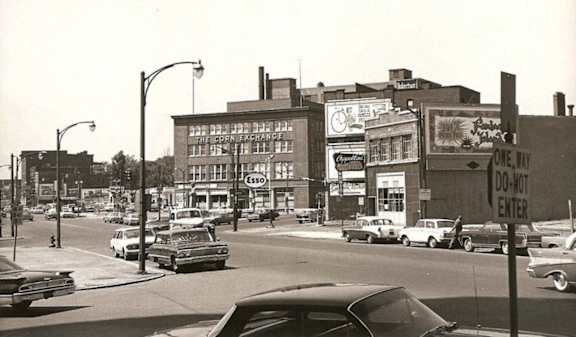
Built in 1916, as a manufacturing facility, the building is best known as the Corn Exchange of Buffalo, operating from the late 1930’s through the 1960’s as the inspection site for corn, wheat and grains being shipped to area milling factories together with a grain commodities trading floor.
In 1932, Edgar B. Black, president of The Corn Exchange, predicted that the St. Lawrence Seaway would eventually lead to Buffalo becoming a minor port for Great Lakes commerce. His concerns were realized when the Seaway opened in 1959, marking the decline of Buffalo as a major grain distribution hub. Before the Seaway, Buffalo handled over 200 million bushels of grain in good years, but this number plummeted to under 100 million afterward. As a result, the local flour milling industry suffered, with many mills closing and rail shipments dropping dramatically from 7.5 million bushels in 1958 to just 73,600 by 1964.
In 1955, the Corn Exchange moved to a new headquarters, leaving behind its iconic blackboards at 100 South Elmwood, which became known as the Corn Exchange building. In 1965, the Catholic Diocese bought the building for office use. By the 1970s, the Corn Exchange lost its government ties and transitioned to a third-party inspection role.
After changing ownership multiple times, it was beautifully renovated into one-bedroom and two-bedroom apartments, along with commercial space on the ground floor.